
Bilal M. Ayyub

Technology for Intelligent Decisions: Essays on risk, resilience, infrastructure systems, and AI, informed by analytical rigor and creativity.

Latest

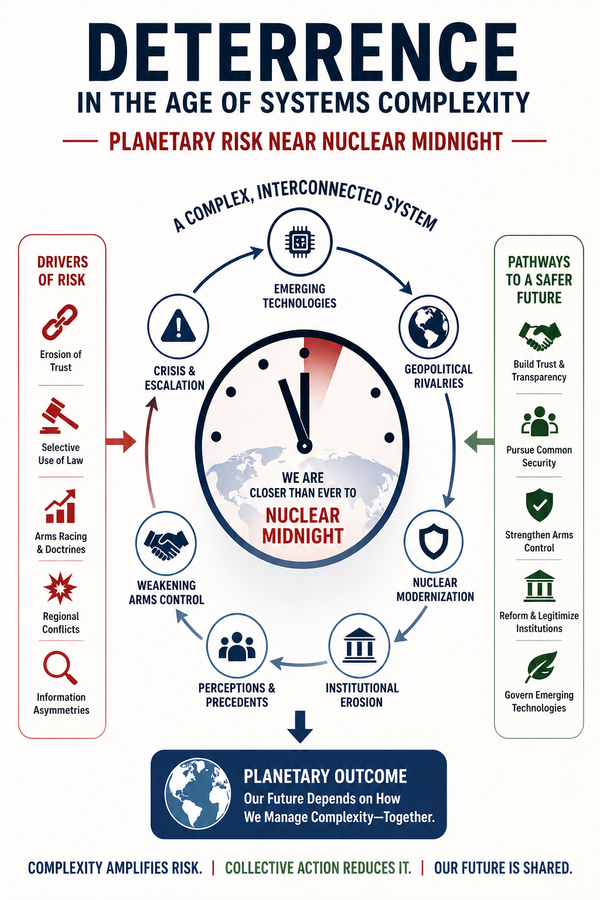
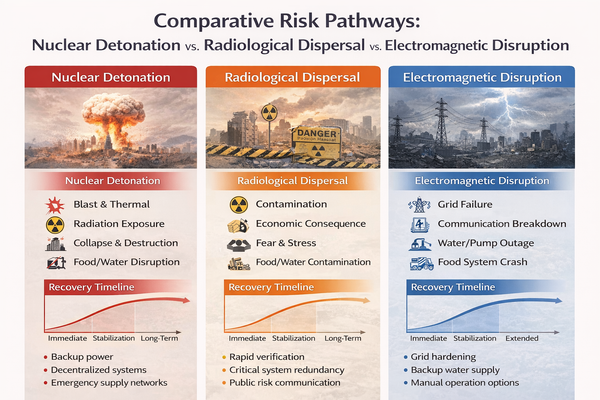
Nuclear Deterrence Failure in Complex Systems: Comparative Consequence Pathways and Resilience Across Scenarios

Nuclear Deterrence Failure in Complex Systems: Comparative Consequence Pathways and Resilience Across Scenarios

A systems-based analysis of infrastructure, food, water, and recovery dynamics Three broad classes of catastrophic risk are often discussed: (1) Nuclear detonation, (2) Radiological dispersal (dirty device), and (3) Electromagnetic disruption (EMP). They are examined from effects to recovery to inform policy and planning. 1. Nuclear Detonation — Multi-System Collapse Primary

By Bilal Ayyub
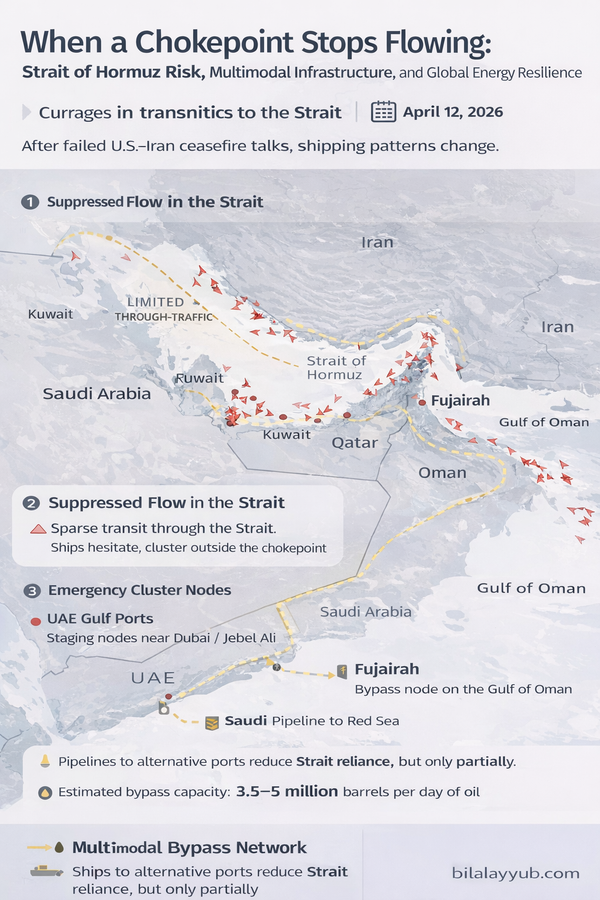
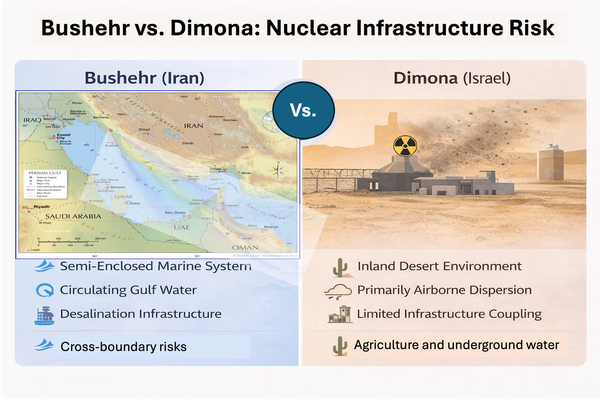
Bushehr vs. Dimona in a War Zone: A Systems-Based Comparison of Nuclear Infrastructure Risks

Bushehr vs. Dimona in a War Zone: A Systems-Based Comparison of Nuclear Infrastructure Risks

Introduction Public discussions of nuclear risk often focus on the facility itself, its design, containment, and potential release mechanisms. This perspective is incomplete. Risk must be understood as: A function of the infrastructure system, environmental dynamics, and interdependencies. This becomes particularly evident when comparing: * Bushehr Nuclear Power Plant (Iran) * Dimona

By Bilal Ayyub
Infrastructure Tokenization Fundamentals: Definitions, Systems, Potentials and Risks

Infrastructure Tokenization Fundamentals: Definitions, Systems, Potentials and Risks

💡My prior essays on Infrastructure Tokenization generated a lot of interest and questions related to terminology and why needed which are being addressed briefly herein. My prior essays are: Infrastructure Tokenization: An Institutional Playbook for Capital Modernization Infrastructure Tokenization: Modernizing Assets Through Digital Finance Tokenization for Digital Finance Tokenization refers

By Bilal Ayyub